When the Roles Reverse
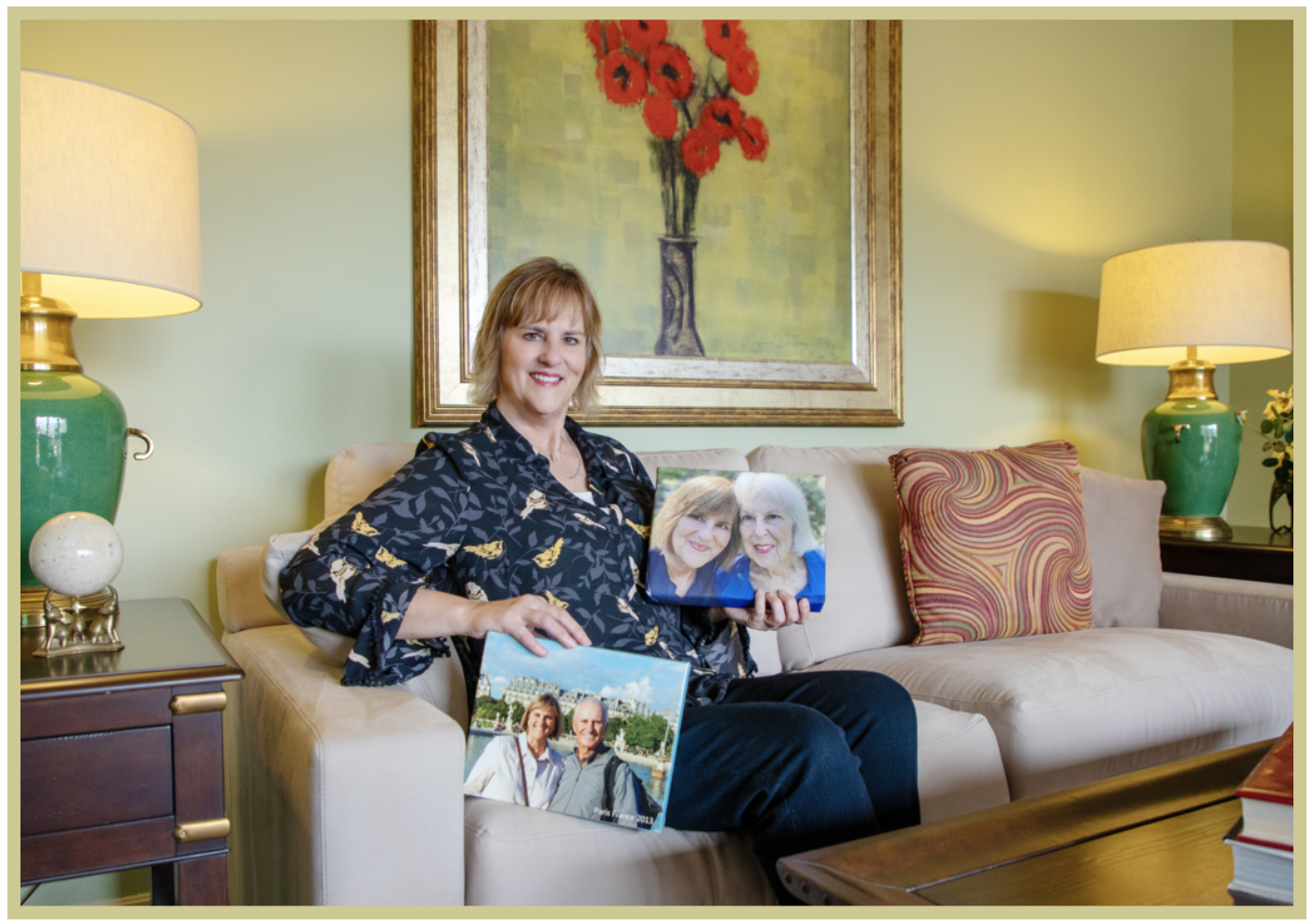
Theba Lolley cared for her father Clint (at top) and mother Barbara in their final years after both were diagnosed with serious dementia conditions. 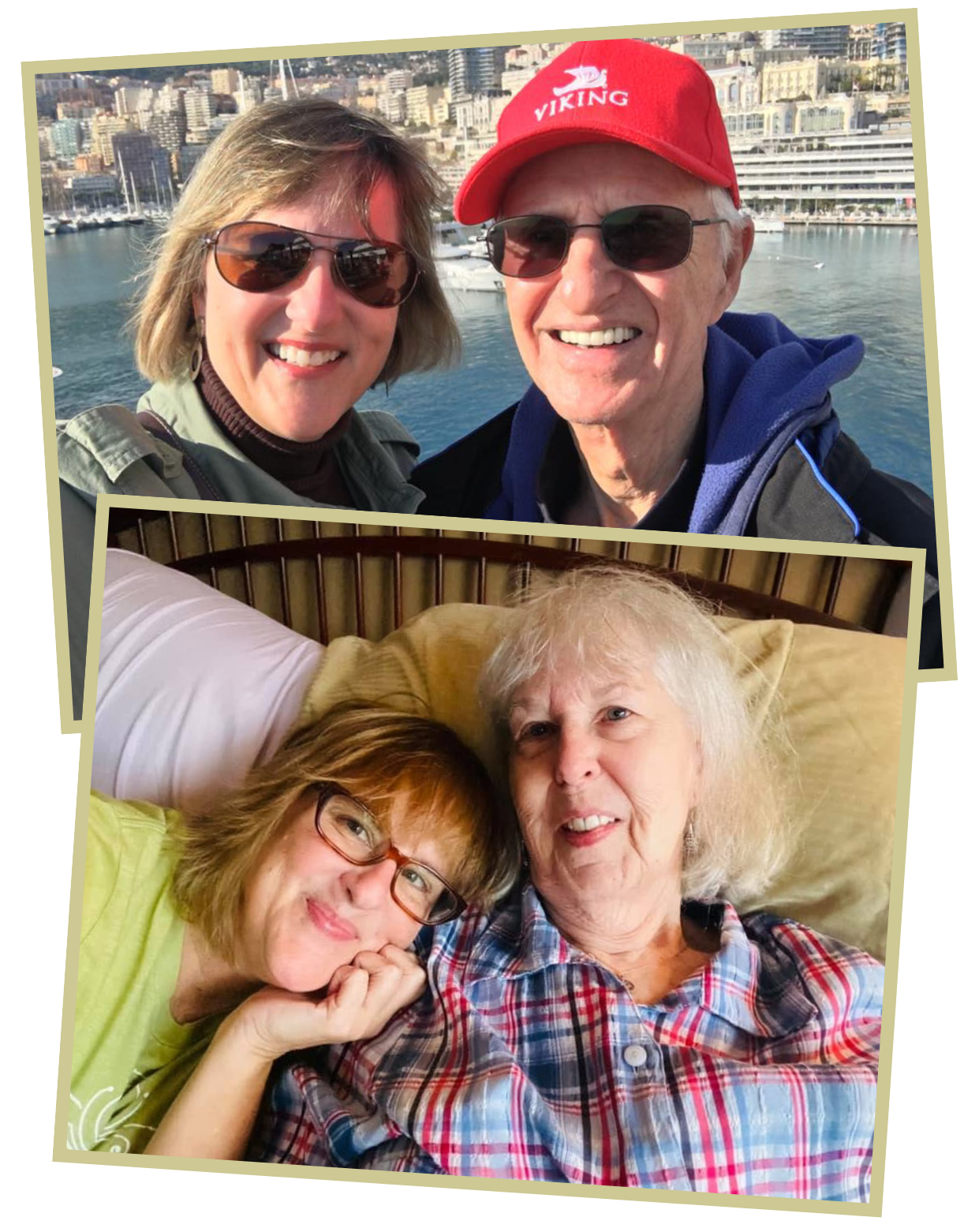
She recalls the week her mother transferred to hospice care clearly — the white lie she told her mom, that the ambulance was just picking her up for a doctor’s appointment; her mother’s playful yelp when a nurse accidentally pulled her hair when positioning her in bed; her mother’s assurances that she would be OK.
By the time staff from Hospice Home Care called her in the early hours of Sept. 30, 2024, Theba knew her mother, Barbara Kaye Lolley, would not be returning home. She rushed from her Foxcroft home, knowing the end was imminent. By the time she arrived at the hospice house, her mother had already passed.
“That was so like my mom — she knew I wasn’t going to handle it,” Theba recalls. “I imagine her conversation was, ‘Jesus, we’ve gotta go. Theba thinks she can handle watching me die, but she can’t,’” Theba recalls.
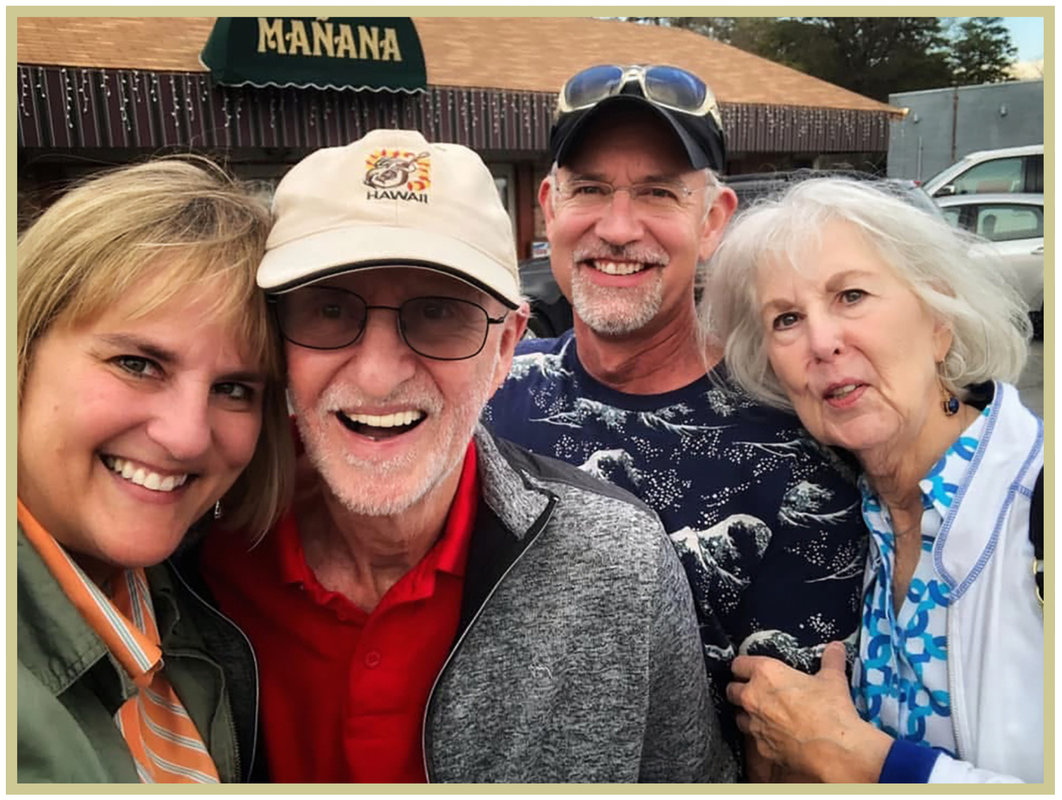
Theba Lolley and her parents, Clint and Barbara, all visited her brother Mikel (third from left) in Hawaii in 2017. The trip was eye-opening for Theba, who realized both her parents were experiencing something more serious than age-related forgetfulness.
It took Theba another year to process her mother’s death, and she still grieves for her today. However, the grief has transformed as time has passed. She’d spent seven years preceding Barbara’s death caring for her, including three years as her full-time, sole caregiver. Everything changed in an instant when her mom died, and now Theba is rediscovering herself as she integrates everything she learned from caregiving into a newfound independence.
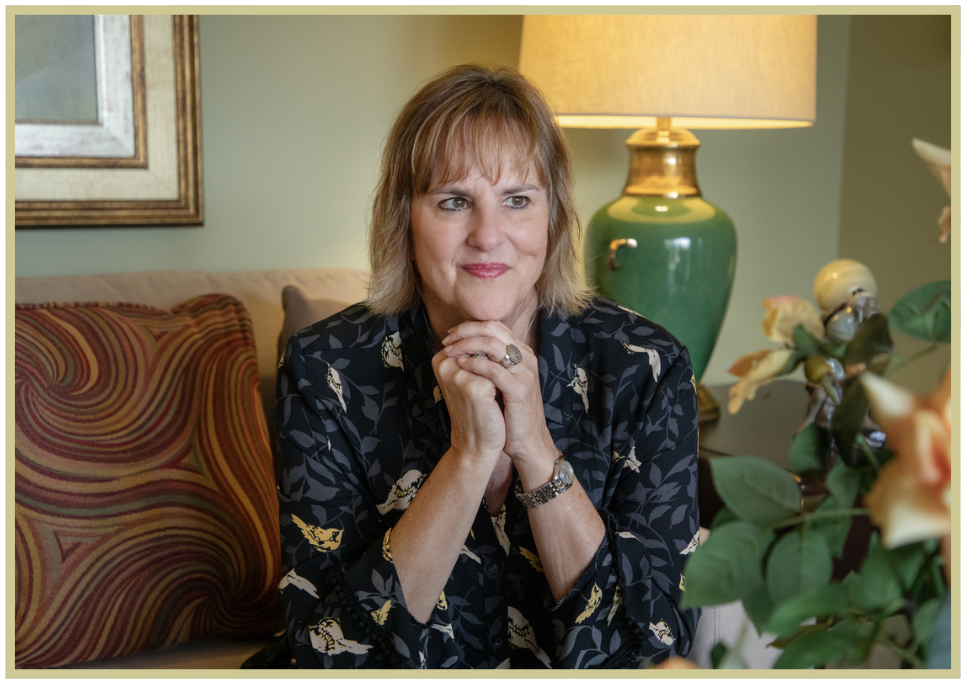
"I went from denial and avoidance to being proactive. ... I realized my parents were looking to me: I'm their advocate, their caregiver."
Setting an Example
Theba had a typical childhood in the 1970s in Little Rock. After high school, she attended the University of Arkansas at Little Rock. Her parents divorced when she was in her 20s, and she lived with her mother to help make ends meet, paying rent to ensure her mom could hold on to the family home. When her grandmother moved in, Theba found her own apartment, but she continued to help out at home.
“She had lost her father and was helping her mother,” she says. “I did what I could to help with her mom.”
When her grandmother later got cancer, Theba decided to move back in with her mom to help in caregiving. By then, she was working in marketing at Channel 11. Her father lived in Illinois, and after her grandmother died, Theba decided to continue living with her mother. Her father, meanwhile, was caring for his mother in her final stages of life.
“Dad cared for his mother. They both just showed devotion to their aging parents,” Theba says. “Caregiving was modeled for me, but at the time, I wasn’t thinking about my own parents getting older.”
In the mid-2010s, when both her parents were in their early 70s, she began noticing changes in their behaviors and personalities.
‘Something was wrong’
Theba and her dad loved to travel together and often took international trips. Though he lived several states away, the trips were their semiregular opportunities to spend time and reconnect. It was during one of the trips that she first realized something had changed in her dad.
Her dad had been known to shuffle his feet for years, but it didn’t seem like a huge problem, given his athleticism, since he was still teaching tennis after retirement.
He eventually confided in Theba that his memory was worsening, particularly when it came to paying bills. But it wasn’t until a stranger noticed his behavior was off that Theba really recognized the signs of dementia.
“We were standing at the salad bar and she asked what was wrong with him,” Theba says. “Whatever she said, I realized, something was more wrong with my dad than I thought.”
Around 2014, Theba started noticing some changes in her mother too. She wasn’t paying her bills on time, though she’d always taken pride in keeping a balanced checkbook.
“There was nothing drastic, no huge personality change. Now, there’s bills unopened — she stopped doing things she used to do,” Theba recalls.
In 2016, Theba’s aunt, her mom’s sister, died, and her mother’s personality shifted significantly. A friend whose mother had Alzheimer’s suggested that Theba’s mom might too, but Theba says at that time, she wasn’t ready to face the possibility.
“I avoided the subject,” she says. “I thought, ‘My gosh, my parents are really getting old.’”
In 2017, Theba, her mom and her dad took a trip to Hawaii to visit her brother Mikel. That trip opened her eyes to the reality of her parents’ declines.
“I was doing everything, keeping up with everything,” she says. “Mom walked up to me while we were there and asked if Aunt Faye was dead. I realized she really didn’t know. That was significant to me — that was her beloved sister, who she cherished life with, and she really didn’t know. I realized, ‘This is more than old age.’”
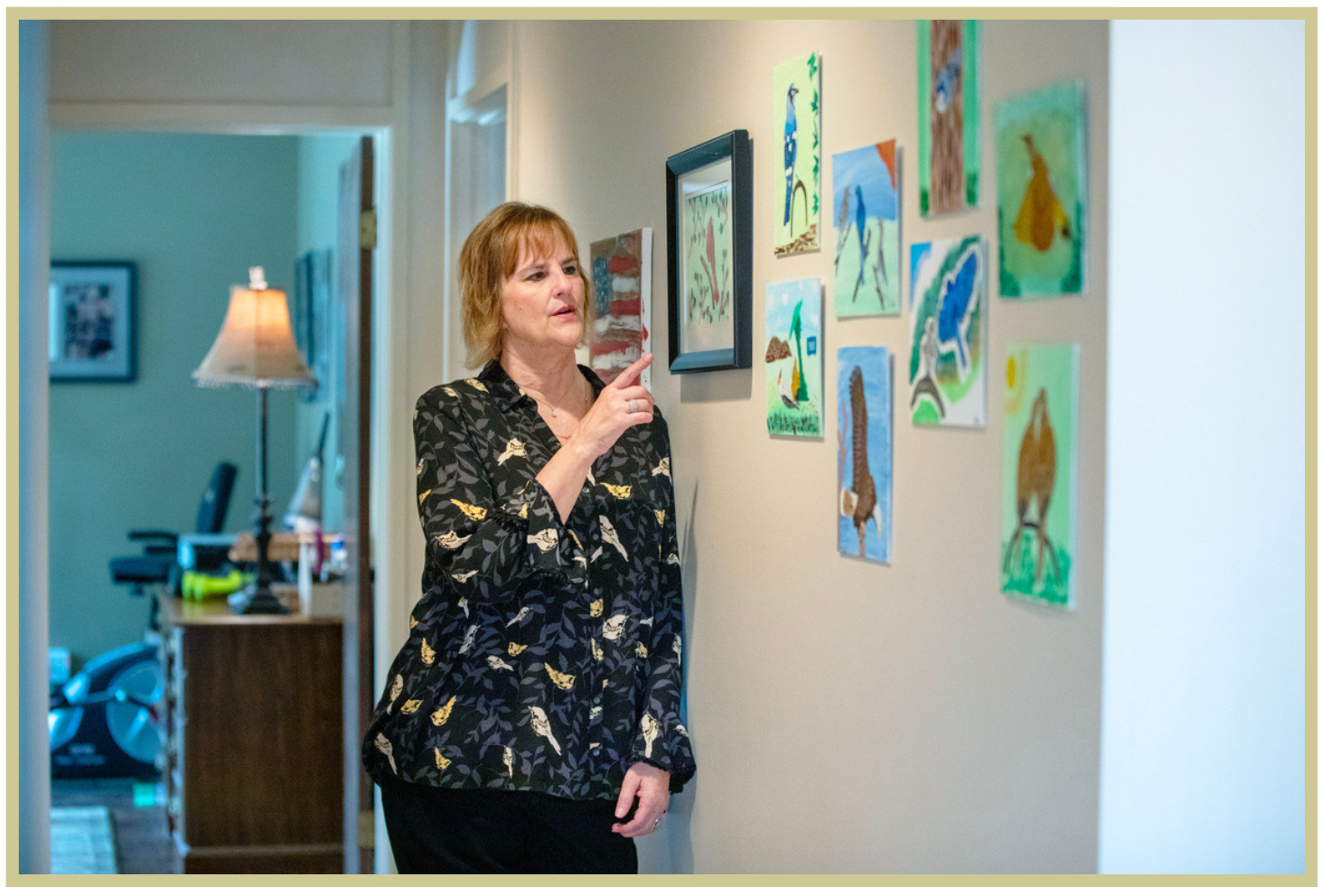
Theba Lolley and her mother Barbara spent a lot of time watching birds congregate at their bird feeder. After her mother passed, Theba took up painting the birds they'd seen together. She had her painting of a Cardinal framed because it was her mother's favorite species.
A short time later, her father told her he wanted to be closer to her, so Theba helped him find an apartment near her home in Little Rock. He was diagnosed with Parkinson’s disease while he still lived in Illinois, but when he moved to Arkansas, Theba took him and her mother to the University of Arkansas for Medical Sciences for evaluation.
“Dad had Lewy body dementia. When he moved here, I thought I was dealing with a man with Parkinson’s and aging memory issues; it was shocking how quickly it progressed,” she says. “Mom was diagnosed with Alzheimer’s.”
Before their diagnoses, Theba says she was afraid to face the facts of dementia to the point of avoiding the conversation with friends and colleagues. But once she knew what her parents were facing, Theba made the choice to seek out information about their conditions and arm herself with knowledge and resources.
“I went from denial and avoidance to being proactive,” she says. “I did a lot of studying, Googling stuff, talking to people, talking to friends, trying to figure it out. I realized my parents were looking to me; I’m their advocate, their caregiver.”
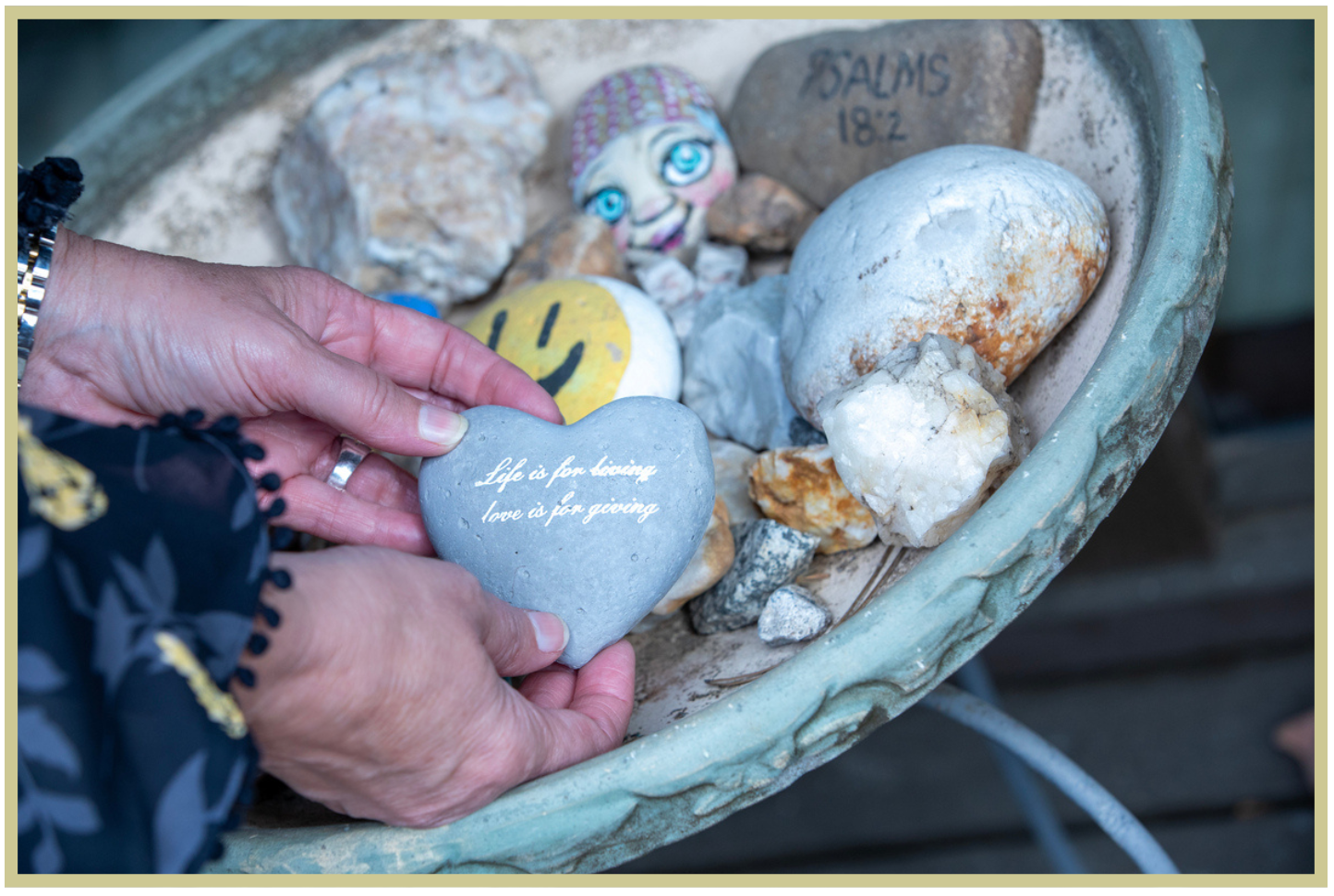
Barbara Lolley collecte rocks during her final years. After she died, friends brought rocks with meaningful quotes and art to Barbara's celebration of life.
Role Reversal
While Theba’s father was open about his forgetfulness and difficulty with activities of daily living, her mother remained cognizant of her role as a parent. Theba says she had to strike a balance between acknowledging the parent-child relationship and ensuring her mother was able to fulfill basic responsibilities.
“My therapist at the time, she told me, ‘Your mom needs a daughter, not a nurse.’ I had to figure out how to not over-nurse my mom. If she didn’t want to — well, she was a grown woman, so she didn’t have to,” Theba says. “I had to ask myself, ‘How can I love my parents and honor them? How can I make them feel like the parent?’ It’s all about dignity. You want to respect them.”
When her father still lived in Illinois, Theba worked with him to set his bills on autopay. He made her his power of attorney, and her mother did the same after her Alzheimer’s diagnosis. Before that, she was paying her mother’s bills behind her back, eventually having those set to autopay as well, and having paper bills redirected from their home address.
“I had to kind of do sleight-of-hand because I didn’t want to upset our mother-daughter relationship. I had to figure out clever ways to do things. They called them ‘fiblets’ in my support group,” Theba says. “I had to be very clever to spare mine and my mother’s feelings. … It was never about trust — of course she trusted me — but about giving up control.”
"Caregiving was modeled for me, but at the time, I wasn't thinking about my own parents getting older." 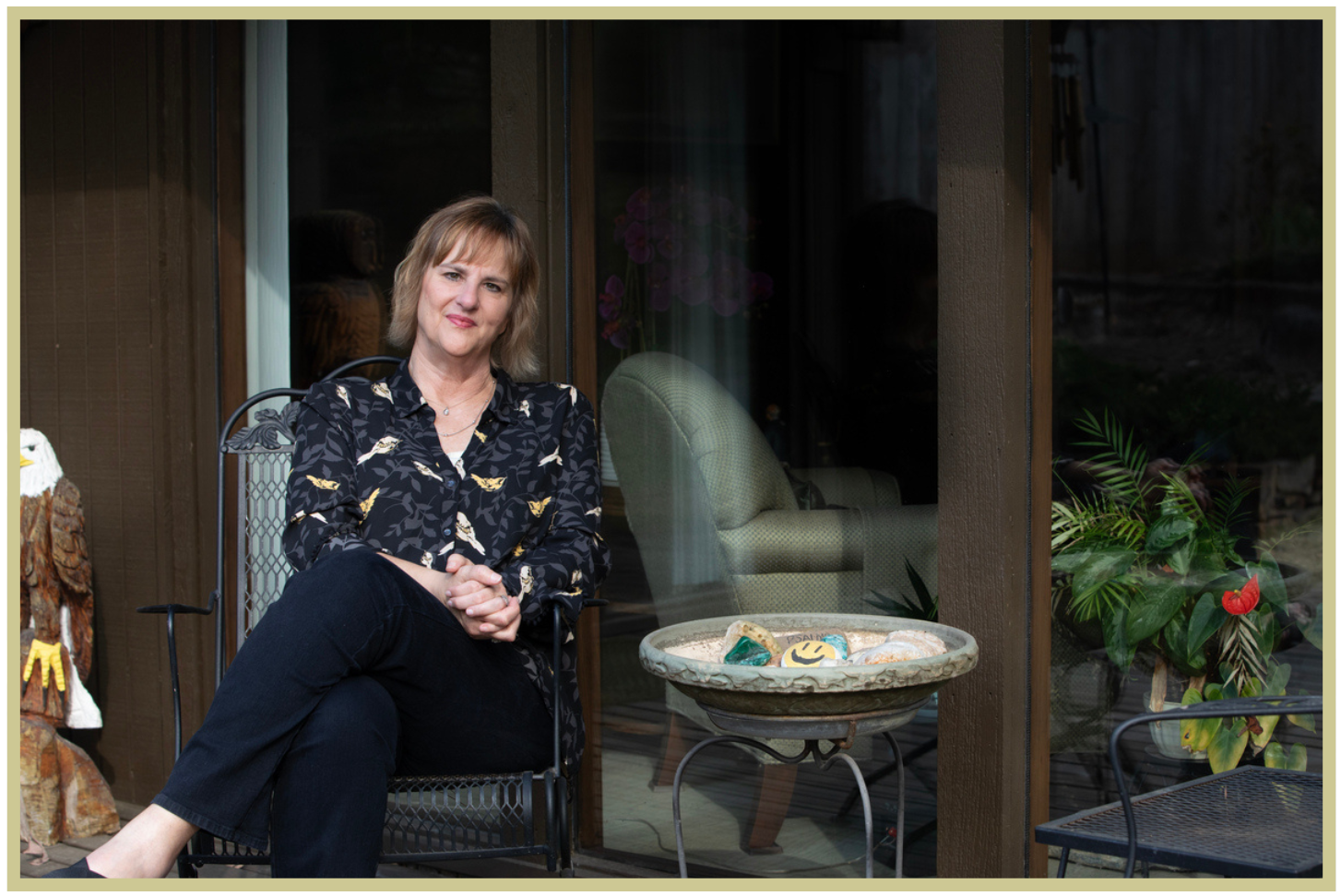
Theba’s brother eventually moved in with their father to supplement the in-home health care he was receiving. Clint Lolley died in 2019 in hospice care.
In 2020, Theba was able to start working from home due to the COVID pandemic. That gave her more time to spend with her mother, but she quickly realized that even when she was around, if her mom didn’t have eyes on her, she’d forget Theba was home.
“I needed to be physically attentive so she’s not anxious. She didn’t like to be alone. If I was in the office down the hall, she thought I was gone,” Theba says.
In 2021, Theba retired from her position at Channel 11. She built a podcast studio in her home and started recording a regular show that she called “Don’t You Remember,” a phrase she had to un-learn when she started caring for her mother.
“One of the first things I learned in my support group is that if you find yourself saying ‘don’t you remember,’ it’s a sign that something’s going on,” says Theba. “If you can limit yourself saying that, you can limit consternation and stress for you and your loved one. Every time you say it, you’re reinforcing that something is wrong.”
The decision to retire was difficult for Theba, who loved her job.
“I knew how expensive care was; Mom didn’t have that money,” she says. “It was so expensive, it didn’t make sense to pay somebody. She was my best friend. I knew I’d be the best caregiver. I wanted to honor her. I trusted God financially.”
The pair prayed together every day; Theba says her faith kept her going even through the most difficult days.
“I was constantly praying and seeking wisdom,” she remembers. “I didn’t know what was going on in her head, she didn’t verbalize it. I had to maintain my peace and strength.”
Navigating a New Normal
As her mother’s condition progressed, Theba began spending nearly all of her time at home. She’d pop out for Bible studies, to grocery shop and occasionally take a walk through her neighborhood, but she became anxious any time she left. With the Family Respite Care Grant from the Alzheimer’s Association Arkansas chapter, she was able to hire a friend’s mother — a retired nurse — to stay with her mother during these outings.
“That was very helpful. I had her coming more towards the end. She came to support me, too,” Theba says. “My support group told me, ‘Your parents might not want you around all the time.’ It gave Mom someone else to talk to.”
asset_cutline
In the fall of 2024, Barbara Lolley’s health started declining. Theba found herself becoming very stressed out and realized she was experiencing anticipatory grief.
“It’s where you anticipate the death of your loved one. That explained the emotional chaos I felt. I was such a basket case,” Theba says.
One night, her mom’s behavior changed significantly, she slipped and fell, and Theba knew the end of their journey was nearing.
“I laid on the floor and called out to God; I said, ‘I’m tired, I’m weary,’” Theba says.
The next morning, Theba called for hospice respite. On a Sunday night visit to the hospice facility, her mother didn’t stir much; she’d been given medicine to help her sleep and calm her nerves. Theba prayed with her again, talked with her and told her she loved her. The next morning, she got a call from a hospice nurse that her mother was nearing death.
Barbara Lolley died on Sept. 30, 2024. After her mother died, Theba felt lost. She joined an online course on grief, where she learned how others navigated their own losses. She continued her therapy sessions.
“You want to know how long it’s going to take, things to be aware of, things people will say that will affect you, learn healthy ways to respond to people who don’t understand or haven’t lost someone,” she says. “I had to figure out how to be my own caregiver.”
Her faith in God helped her eventually learn to live with her new normal.
“He was the quiet voice that helped me focus,” she says. “I didn’t have parents anymore, but I still had a heavenly Father. I had to do different things to change my mindset, focus on what was hopeful and helpful.”
In 2025, Theba began volunteering, offering creative work for nonprofits and mentoring local middle school girls. These days, she does freelance work and continues volunteering for the Alzheimer’s Association’s Arkansas chapter.
Losing her mother was like losing part of herself, Theba says. Part of her identity was as her mom’s caregiver, and it’s taking time for her to acclimate to life on her own.
“That switch from being everything to and for them, then overnight it’s gone — I had no idea who I was. I felt like I had no purpose in life, no substance,” she says. “This year, if I go on a walk and start crying, there’s a lot more joy in my tears. I’m thankful to God that I had a mom and it was her, and my dad. … You begin to see with different eyes. I lay my sadness at His altar. I know she’s with Jesus and I’m happy with that. But she’s not here, so I’m mad and sad about that. You’ll have every emotion.”
Tips for Other Caregivers
Theba Lolley spent seven years caring for her parents. She shares some of the most essential resources she utilized and important things she learned during her time as a caregiver:
Support groups: “UAMS has a great list of groups at different times to account for work schedules. I was scared to death, and it is a scary step — because I didn’t want to hear their stories, I didn’t want to make assumptions about my own story, but as hard as it was to hear, there was not one time I left group that I didn’t receive an incredible resource or tool that I’d come home and institute immediately,”
Self-care: “The death rate for caregivers is high. I had to make decisions for my health. I started eating better, focused on starting to learn more.”
Respite grants: “It’s important to make efforts to do things you enjoy. That’s where respite grants are so helpful. It’s a step that can be kind of scary, but you’ve got to do it for yourself.”
Leave the past in the past: “Don’t try to solve family trauma like that anymore. It’s not fair to them because they don’t understand, don’t remember. That time has passed.”